

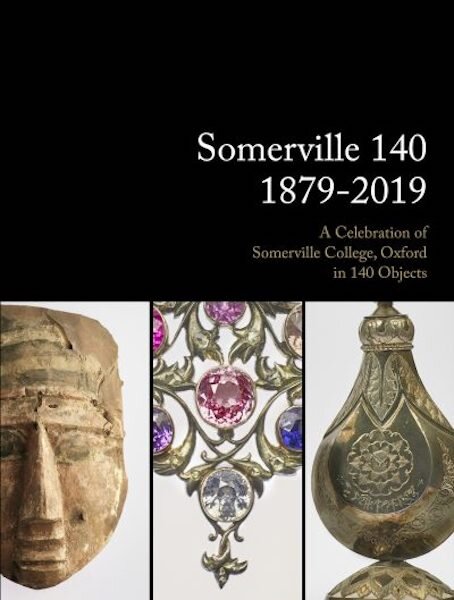
Last year, I was lucky enough to work with Somerville College, Oxford and write their new history. Now, Somerville 140 is out. It’s an honour to be asked to do something like this. It’s also a little nerve-wracking. Are you up to it? Will you get it all sorted out in time? Just how many mistakes, exactly, will you make? Irresistible, though, to be able to poke your nose into such a place. Here’s a little about how and why I did it, and what I learned along the way.
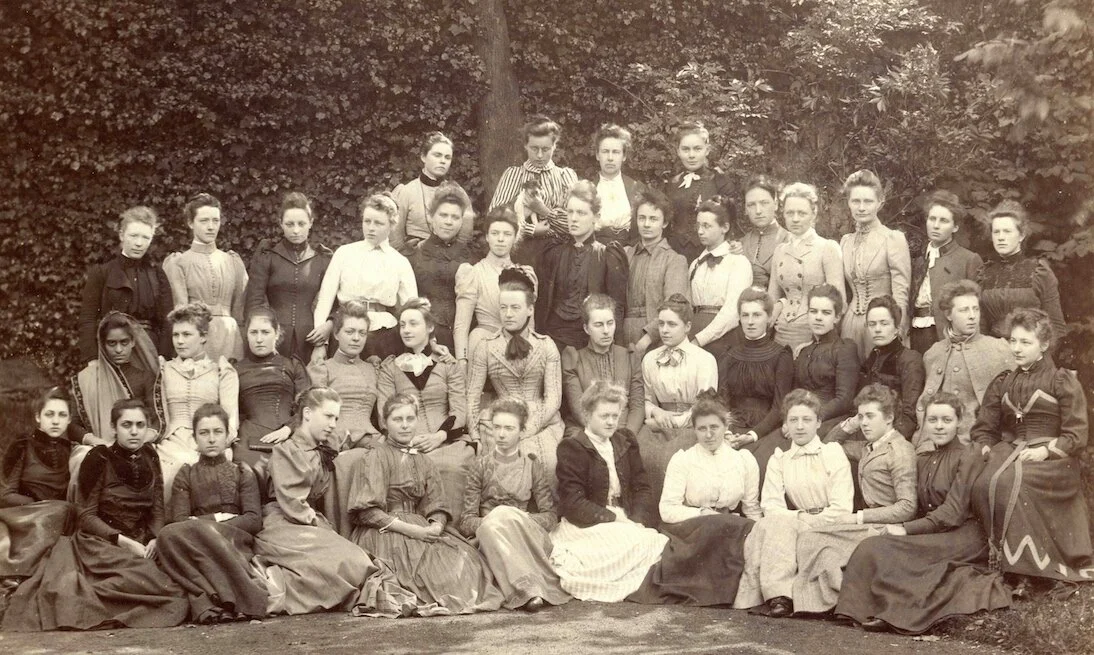
Somerville College photograph from the 1890s
Somerville was set up in 1879 to give women an Oxford education when most people didn’t think women should go to university at all. It is, as it has been for the last 140 years, a place of pioneers. The first woman to study Law at Oxford (Cornelia Sorabji) was one of its early students. The UK’s first woman Prime Minister, Margaret Thatcher, studied there. As did India’s first woman Prime Minister (Indira Gandhi), and the first and so far only British woman to win a Nobel Prize for science (Dorothy Hodgkin).
Politics, science and law impress me. They do. But I should probably come clean at this point. What really enticed me were the writers. Somerville has produced quite a few of my literary heroines, though I didn’t know when I first read them that they had this place in common. Dorothy L. Sayers, Penelope Fitzgerald, A.S. Byatt, Iris Murdoch, Susan Cooper, Lucy M. Boston, and those are just my particular favourites. 17 Somervillians (as those who have studied at Somerville call themselves) have been nominated for the Booker Prize (including, in 2018, the youngest ever nominee, Daisy Johnson, for Everything Under). I wanted to know what it was about Somerville that had drawn these women to study there, and what being there had done for them.
How to write the history of such an unusual place? Somerville chose to tell its history in objects, inspired by Neil MacGregor’s brilliant A History of the World in 100 Objects. It proved to be the perfect way in, because objects tell you so much about people: the people who created them, gave them, loved them, looked at them. Yes, buildings are eloquent too, and the ‘feel’ of the place matters, but it’s the people that speak loudest about what an institution stands for. There are the people you meet now. And then there are the people whose stories you encounter when you look at books, objects and archive material. It’s a different sort of meeting, but it’s still powerful.
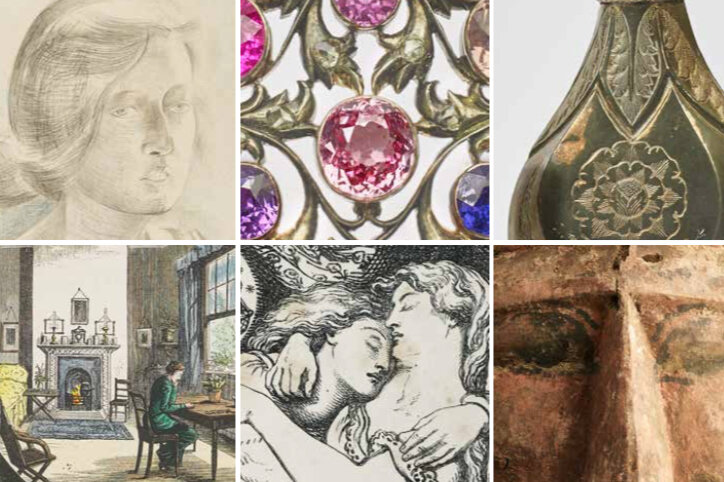
An Egyptian mummy mask. An Oxford Book of English Verse bearing a stamp from a prisoner-of-war camp. A certificate honouring an archaeologist for helping imprisoned Ukrainians. A silver anklet. A collection of sea shells. Each and every thing tells the story of a fascinating individual. My favourite? A drawing of a young woman. Hanging unobtrusively above a door, it drew me in, and I wanted to know more. An early work by Paul Nash (whose paintings I have always liked), it shows Audrey Withers, who studied at Somerville and went on to become Editor of British Vogue. Described by Elizabeth David as ‘original and enlightened’, Withers made sure that the magazine included superb writing (from David herself, and from the likes of Kingsley Amis) as well as beautiful clothes. I like the drawing just because I like it, but I also think that ‘original and enlightened’ is a pretty good way to describe Somerville too.
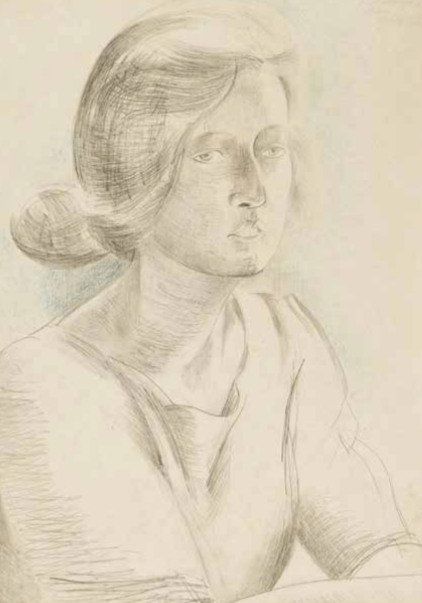
Audrey Withers, sketched by Paul Nash
So the objects told the stories, and together, the stories built the picture of an extraordinary place. A place of high standards and high expectations. A place of love and friendship. A place of service and work. A place of good conversation and strong networks of support. And it was those strong networks of support that made it possible for me to write anything at all. I asked for help from anyone and everyone, and they gave it generously, looking for things in the archives, telling the good stories, putting up with my endless questions (‘Why is that there?’, ‘What is that?’, ‘What was she like?’, ‘How is that spelled, again?’). And I discovered that what makes the stories come to life are the beautiful photographs of the objects. Watching a really good photographer at work (in this case, Angelo Hornak) gives you proper respect for the effort that goes into a great image.
I also learned that, no matter what’s drawn you into a project like this, you need to leave your personal opinions at the door. I might have strong views about Margaret Thatcher (I do), but this isn’t the place for them. Again, it’s the personal stories that illuminate. I found out that Thatcher used to see her tutor from Somerville (as it happens, the Nobel Prize winner, Dorothy Hodgkin) from time to time. They couldn’t have been further apart politically – Hodgkin used to lecture Thatcher on the need for nuclear disarmament – but Thatcher retained such respect for her tutor that before their meetings she would cancel her appointments and frantically ‘revise’, reading all the latest Chemistry articles so that she wouldn’t look a dunce. It might not have changed my attitude to her politics, but it did make me think again about the kinds of qualities you need to do what she did.
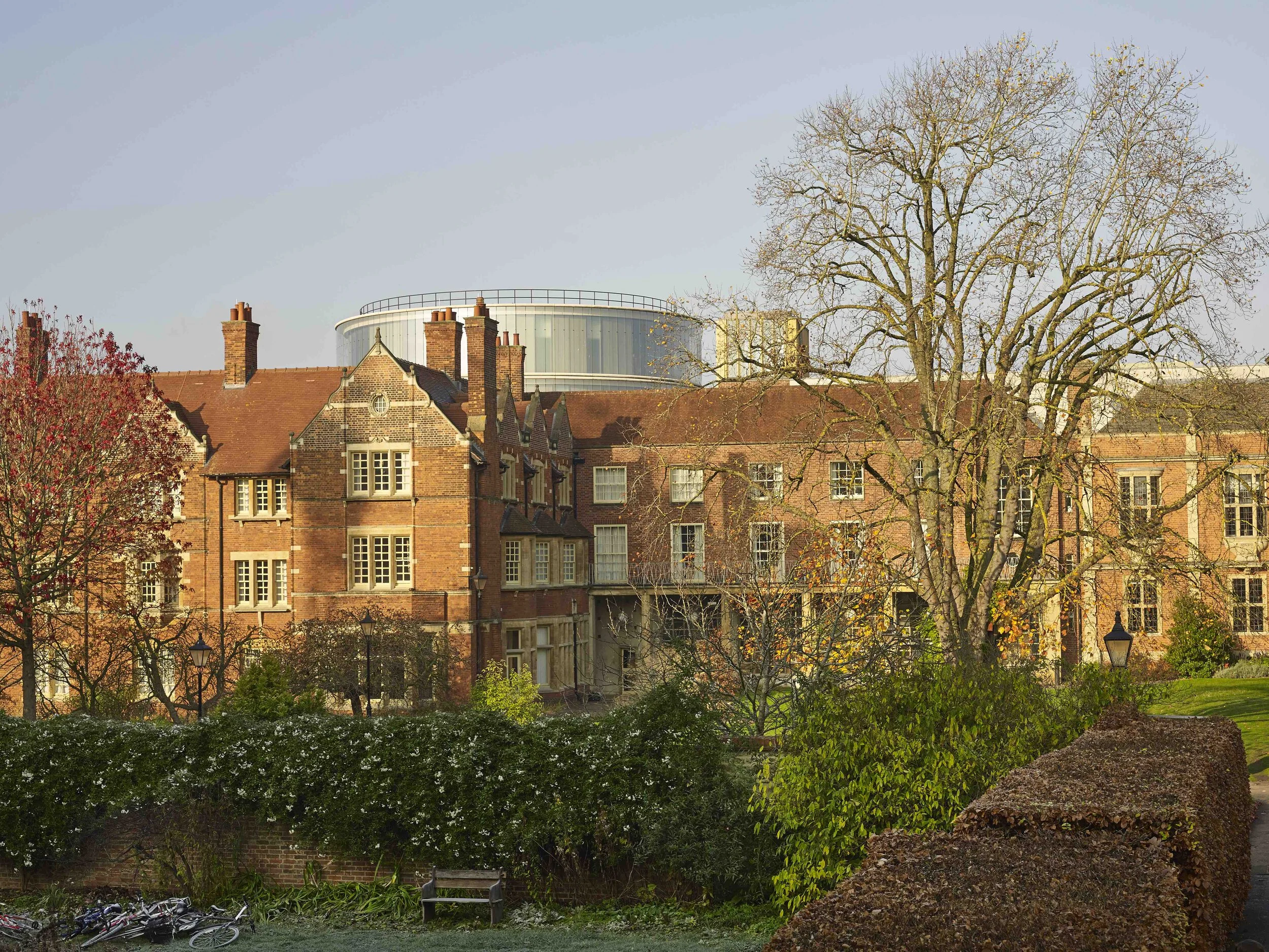
Somerville College, Oxford (photograph: Angelo Hornak)
Somerville has always drawn in clever, unorthodox women (and, more recently, men too. It opened its doors to male students in 1994) who have a sense of mission and purpose, and a work ethic to match. Often, they’re stubborn with it. That’s how they got things done. Bumping into Somervillians in person and in history books means bumping into the same things, over and over again. Intelligence. Curiosity. Determination. And the answer to the question about what Somerville had done for those writers I admired so much? It’s that same set of qualities: intelligence; curiosity; determination. I’m sure they had them before they came to Somerville, but in a place where everyone sets such a high value on the life of the mind, on creativity, on taking work seriously, it’s no surprise that the College’s writers, politicians, scientists, lawyers, everythings, have made their mark on the world.
Somerville 140: 1879-2019. A Celebration of Somerville College, Oxford in 140 Objects is available for order now and is published by Scala. Find out more about the project in Somerville’s magazine.
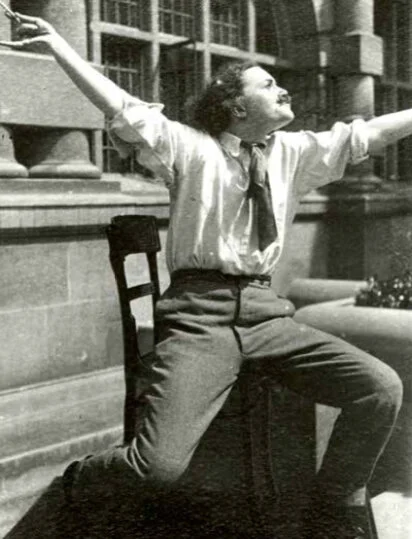
Dorothy L. Sayers as a student at Somerville (giving a spirited impression of Hugh Allen, Conductor of the Oxford Bach Choir)